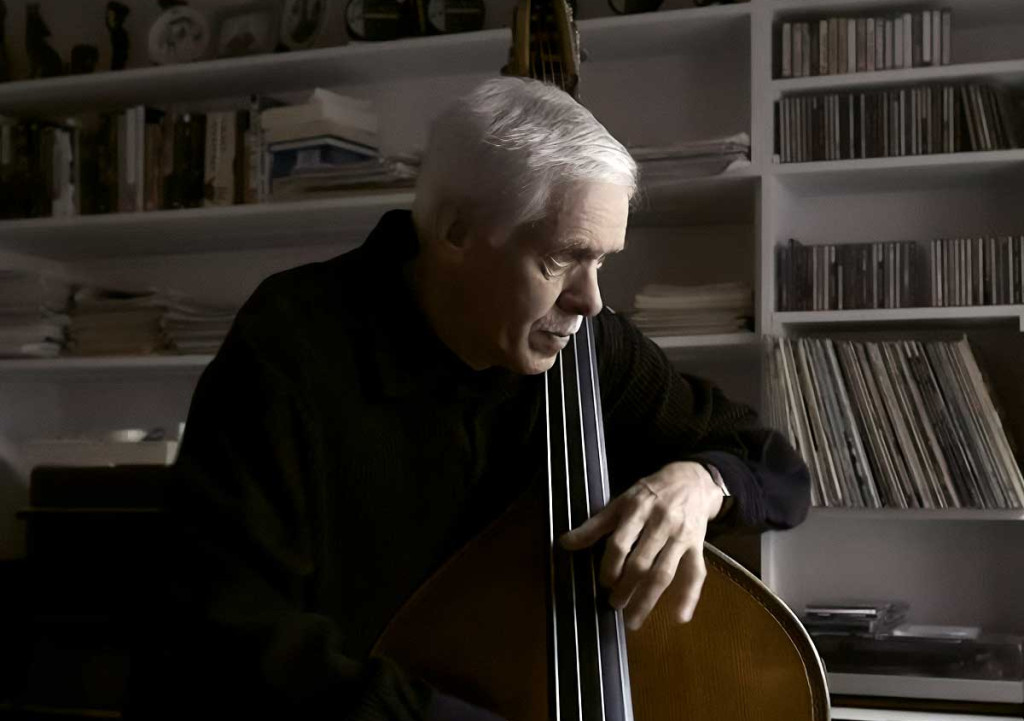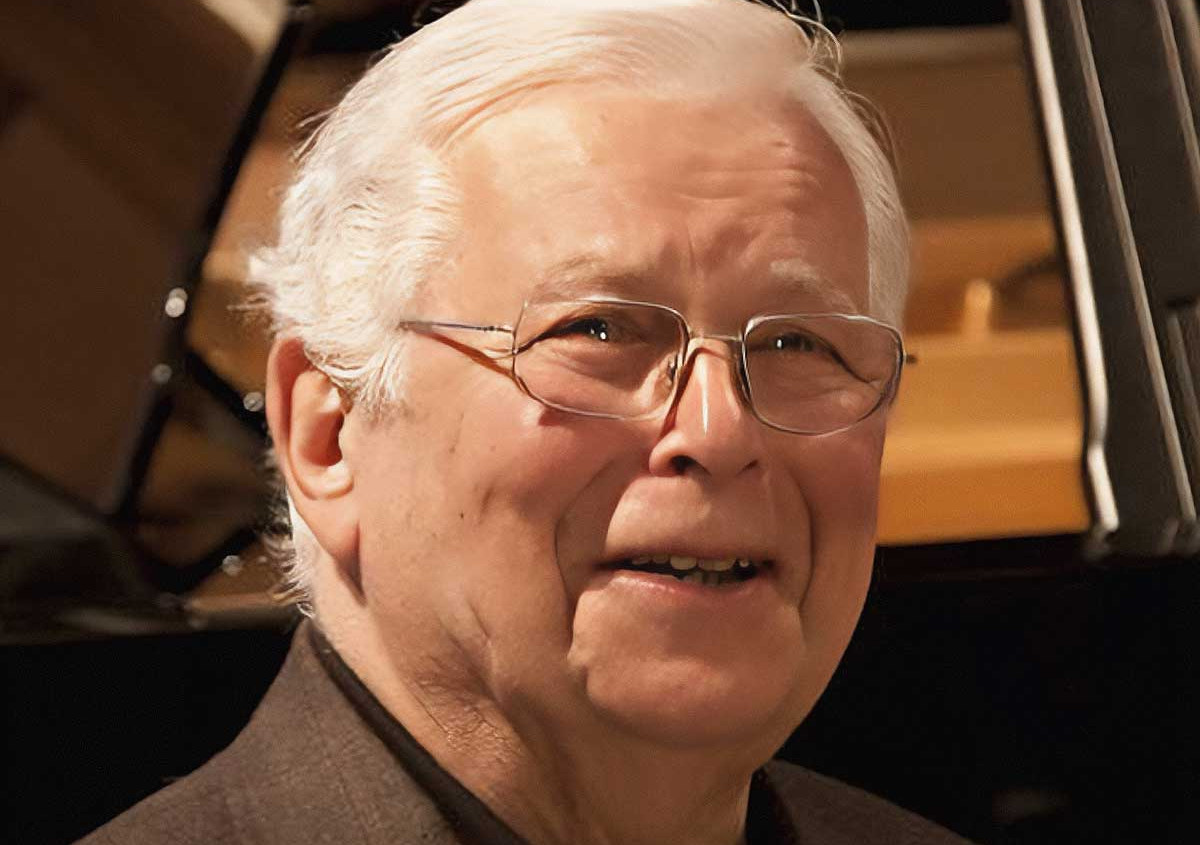
Conductor Victor Feldbrill
2014 TMA149 Lifetime Achievement Award Recipient
By Dr. Réa Beaumont
Throughout his stellar 74-year career, Maestro Victor Feldbrill has conducted symphonies around the world, including every major Canadian orchestra. After studying with Sir Adrian Boult, Pierre Monteux, and Ettore Mazzoleni, Feldbrill’s national and international reputation flourished as he collaborated with Glenn Gould, Claudio Arrau, János Starker, Philippe Entremont, Luciano Pavarotti, and many of the finest musicians of the twentieth century. Feldbrill had the honour of conducting the Toronto Symphony Orchestra and the Winnipeg Symphony Orchestra in command performances for Queen Elizabeth II and Prince Philip during their tour of Canada in 1959.
Born in Toronto in 1924, Maestro Feldbrill first joined the Toronto Musicians’ Association at age 16 when he was contracted as a violinist to perform in the High Time Orchestra for a CFRB radio broadcast of music by a fellow TMA member, the composer and producer Howard Cable. With an early start as a violinist in the Toronto Symphony Orchestra, Feldbrill began a 62-year relationship with the orchestra that he guest conducted at age 18, later becoming its Resident Conductor (1973-77). He founded the Canadian Chamber Players (1952), was Music Director of Orchestra London Canada (1979-1981), led the National Arts Centre Orchestra in a cross-Canada tour (1992), was Artistic Director and Principal Conductor of the Hamilton Symphony Orchestra, and guest conducted the CBC Orchestra on nineteen occasions.
Beyond Canadian borders, Feldbrill’s growing stature led to an international career and he was appointed Chief Conductor of Tokyo’s Geidai Philharmonia (1981-87) and a professor at Tokyo University of the Arts. He continued to receive invitations to guest conduct in China, the Philippines, the former Soviet Union (1963, 1966-67), and throughout Europe, including the BBC Symphony Orchestra (from 1957 onward).
Feldbrill’s long and illustrious career was not without its difficulties, however, and few people are aware that he has always been a strong advocate of ensuring that musicians receive adequate financial support. As part of his contract negotiations with the Winnipeg Symphony Orchestra in 1958, he stipulated that professional musicians have to be recognized for their work. As a result — and after many negotiations — the bulk of the WSO were given 26-week contracts for the first time.
Feldbrill has also consistently supported Canadian composers. In his second of ten seasons as Conductor of the WSO (1958-68), he programmed works by Harry Somers, John Weinzweig, Barbara Pentland, Clermont Pépin, and S.C. Eckhardt-Gramatté. Unfortunately, the Canadian compositions met with a storm of seemingly relentless negative media from Winnipeg critics. This reaction is difficult to comprehend today, considering that Winnipeg has since become almost synonymous with new music in Canada — however, it took another 30 years for that reputation to be established. Feldbrill also programmed works by Prokofiev, Stravinsky, Shostakovich, Copland and others, to ensure that Canadian audiences would experience some of the greatest music of their time.
For Canada’s centennial, Feldbrill conducted the Canadian Opera Company’s performances of the country’s most famous opera, Harry Somers’ Louis Riel (1967), which Feldbrill describes as “a masterpiece.” Following one of the performances, the Canadian League of Composers surprised him with the first Canada Music Citation on stage at Toronto’s O’Keefe Centre.
Most classical musicians in Canada have either performed under Feldbrill’s leadership or heard the maestro at work, partly as a result of his dedication to training young musicians, including the University of Toronto Symphony Orchestra (1968-82), Toronto Symphony Youth Orchestra (founder, conductor 1974-78), and the National Youth Orchestra of Canada (resident conductor, 1960-62, 1964, 1969, 1975). For his work with young musicians, he was awarded the City of Tokyo medal (1978) and became the first Canadian to receive an American Concert Guild Award (1964). Last year (2013) he returned to the symphony at the University of Toronto Faculty of Music where he had led the conducting and orchestral departments as a faculty member for fourteen years (1968-1982)
Perhaps Maestro Feldbrill’s greatest achievement is his reputation as an esteemed yet respectful conductor committed to attaining the highest musical standards. He developed a strong vision for present and future generations of Canadian musicians, insisting that they receive the finest training to take their place alongside international artists.
On April 4, Feldbrill celebrated his 90th birthday. His remarkable talent continues to be recognized with awards from composers, educators, and governments, which he describes as “gratifying.” He was appointed an Officer of the Order of Canada (1986), received the Order of Ontario (1999), an Honorary LLD from Brock University (1991), Honorary FRHCM (1978), the inaugural Roy Thomson Hall Award (1985), and the Distinguished Visitor Award from the University of Toronto (2013). This year he was named an Honorary Fellow by the Royal Conservatory of Music for his “extraordinary contributions” to music in Canada, and the historic Arts and Letters Club awarded him the Sir Ernest MacMillan Memorial Award.
The Toronto Musicians’ Association is pleased to announce that Maestro Victor Feldbrill will receive its highest honour, the Lifetime Achievement Award.